Who exactly is Trevor Mazzanti?
Good question.
Heavily inspired by the movie Taxi Driver, Trevor is an interesting character.
The main character of Taxi Driver, Travis Bickle, plans on "cleaning up the streets of New York". He plans, and kills, people that make New York "dirty". Basically, anyone who he doesn't deem fit to live in the city.
Although our character, Trevor, does not have the same intent, he is still based off of Travis (catch the similarity in the names, anyone?). He believes that people need to fit into the picture of perfect romance movies, and if they can't play the part, well then..... yikes.
Trevor doesn't have malicious intent, however. It is his mind that's all twisted and messed up.
As stated a couple of posts ago, Trevor is a lonely projectionist who mainly runs romance movies. He wants to live his life like one, but unrealistic to any human being on earth, he cannot come to terms with the fact that he cannot.
This love translates to him being unusually caring and comforting to his victims before he kills them. Its the only way he can be as caring and kind as a lead man, and maybe this will win him the love of his life.
The 30 year old keeps boxes full of "memories" of his victims, because he still quite loves them, in his own twisted way.
The audience is made to pity and sympathize with Trevor, which is what makes the movie so great. Usually, people don't look at a serial killer and think "awww poor guy". It makes the audience question their thoughts and moral compass. That is what we hope to convey through Trevor.
Sunday, March 3, 2019

Sunday, February 24, 2019
Planning
My partner, Ricardo, and I have been brainstorming possible genres and story lines for our film opening. Ricardo eventually brought up an idea months in development, which was a horror/ slasher film opening. We have since planned out the dialogue and the basic plot. We decided to follow less dialogue and rather talk through the film. Not only does the lack of dialogue create suspense, it also allows for mystery and audience interpretation. We are depending on the actions to tell the story.
Our script will depend mainly on actions, and we are hoping to use great symbolism in our opening to truly hint at the rest of the film. Soon, we will create our script and plan our scenes shot-by-shot. I am also looking forward towards creating visually pleasing shots, especially with great contrast and saturation. I believe that with time, effort, planning, and patience, we can create an effective and impressive film opening.
Genre: Psychological Thrillers
Psychological thrillers make us question and fear our own minds. They show how our minds can make us perceive the world and act in ways that we would normally never do.
One of the most interesting ways that psychological thrillers affect the audience is it skews our moral compass. Psychological thrillers usually focus on the character, and show or at least
Characters in horror and slasher films are usually separated into victim and killer. The killer is usually cruel, heartless, and indestructible. They are usually driven by revenge and anger. Many of them are supernatural or sociopaths. They are quiet and sneaky, and smart. The victims, on the other hand, are not so bright. They make silly mistakes that make the audience cringe. They are usually young, female, naive, and foolish.
The plot of slasher movies, although may alternate, follows the same tropes. There is the killer, victim, and survivor. The killer usually has a deep, tragic, backstory and the victim has usually committed some type of wrongdoing. The killer and the victim are trapped in a small area, usually, and it is inescapable. The victim and killer run around, but usually the killer wins and kills the victim. Many times, there is usually a sexual scene or relationship in the movie as well. Many films also have jump-scares, just to fuel the adrenaline rush in the audience. Sometimes, the killer re-emerges and comes back in the most unexpected way.
Many special effects are used in these films in order to show the deaths. Usually produced with cgi or makeup, they are bloody and graphic. They require special effects to pull these off on screen. Especially when the supernatural is involved, it is necessary for technology to play a part in creating the final product. Technology is necessary for the entire story to be pulled together and the audience the get the full experience of the story and the characters.
“Slasher Movie.” TV Tropes, tvtropes.org/pmwiki/pmwiki.php/Main/SlasherMovie.
"Write a Slasher Horror Story / So You Want To.” TV Tropes, tvtropes.org/pmwiki/pmwiki.php/SoYouWantTo/WriteASlasherHorrorStory.
One of the most interesting ways that psychological thrillers affect the audience is it skews our moral compass. Psychological thrillers usually focus on the character, and show or at least
Characters in horror and slasher films are usually separated into victim and killer. The killer is usually cruel, heartless, and indestructible. They are usually driven by revenge and anger. Many of them are supernatural or sociopaths. They are quiet and sneaky, and smart. The victims, on the other hand, are not so bright. They make silly mistakes that make the audience cringe. They are usually young, female, naive, and foolish.
The plot of slasher movies, although may alternate, follows the same tropes. There is the killer, victim, and survivor. The killer usually has a deep, tragic, backstory and the victim has usually committed some type of wrongdoing. The killer and the victim are trapped in a small area, usually, and it is inescapable. The victim and killer run around, but usually the killer wins and kills the victim. Many times, there is usually a sexual scene or relationship in the movie as well. Many films also have jump-scares, just to fuel the adrenaline rush in the audience. Sometimes, the killer re-emerges and comes back in the most unexpected way.
Many special effects are used in these films in order to show the deaths. Usually produced with cgi or makeup, they are bloody and graphic. They require special effects to pull these off on screen. Especially when the supernatural is involved, it is necessary for technology to play a part in creating the final product. Technology is necessary for the entire story to be pulled together and the audience the get the full experience of the story and the characters.
“Slasher Movie.” TV Tropes, tvtropes.org/pmwiki/pmwiki.php/Main/SlasherMovie.
"Write a Slasher Horror Story / So You Want To.” TV Tropes, tvtropes.org/pmwiki/pmwiki.php/SoYouWantTo/WriteASlasherHorrorStory.
Wednesday, December 5, 2018
Media Representation: High School Students/ Teenagers
The media is known to represent High School kids and teenagers in an unrealistically and inaccurately. The media usually represents teenagers as lazy, rebellious, rude, and often portray them as being separated into different cliques. In "Mean Girls", the teenage girls are seen as moody, vengeful and petty, and the entire school is separated into exclusive groups. They describe teenagers and high school as the most critical moment in one's life, filled with drama and problems they must resolve. Another film, "Bring it On", also portrays high school girls as competitive and petty, and makes cheerleaders the stereotypical "queens of the school". It does not show these teenagers worried about school or any other responsibility teenagers usually have, but rather they are focused on drama and school gossip. It is important to note that in both of these films, romance is a major driving factor in the plot and the characters' decisions, and the teenage characters are played by full-grown adults.
I believe that these representations are neither fair nor correct. Although friend groups may revolve around similar interests, they are never as exclusive as portrayed on film. Most high school students worry about their SAT scores and test grades to be caught up in petty drama, and overall, the high school experience is not as dramatic as portrayed. All in all, most high school kids worry more about their grades and college admissions than they do about relationships, drama, or revenge. It is also worth noting that your seat in a high school cafeteria is not the most important decision of your entire life.
One representation of high school teenagers I would retain is the trope that at the end of the day, everything is resolved and that everything turns out okay. It is a nice change from all of the negative representations of teenagers in the media. It also tends to overturn all of the negative representation from earlier in the film. Although I would challenge almost all media stereotypes of teenagers, the two I would focus on is body image and laziness. Although there are many reasons why actual teenagers cannot be hired to play high school children, hiring adults may be harmful to teenagers' body image. Adults with clear skin, fully developed bodies, and a slim, mature figure may cause insecurity and doubt in many teenagers. Girls may question why they don't have the same body type or skin as the model we constantly see on screen, and high school boys may wonder how this "teenager" presented in front of them happens to be over 6 feet tall and extremely muscular and developed. I would also challenge the stereotype that teenagers are lazy in nature. Although there are lazy teenagers, most students must balance school, work, homework, extracurriculars, sports or physical activities, family time, and sleep all into 24 hours. Being a teenager is exhausting, and not seeing the hard work represented in the media makes teenagers feel as if though all the things they juggle in a say are not enough, and they are still lazy, unmotivated creatures.
I believe that these representations are neither fair nor correct. Although friend groups may revolve around similar interests, they are never as exclusive as portrayed on film. Most high school students worry about their SAT scores and test grades to be caught up in petty drama, and overall, the high school experience is not as dramatic as portrayed. All in all, most high school kids worry more about their grades and college admissions than they do about relationships, drama, or revenge. It is also worth noting that your seat in a high school cafeteria is not the most important decision of your entire life.
One representation of high school teenagers I would retain is the trope that at the end of the day, everything is resolved and that everything turns out okay. It is a nice change from all of the negative representations of teenagers in the media. It also tends to overturn all of the negative representation from earlier in the film. Although I would challenge almost all media stereotypes of teenagers, the two I would focus on is body image and laziness. Although there are many reasons why actual teenagers cannot be hired to play high school children, hiring adults may be harmful to teenagers' body image. Adults with clear skin, fully developed bodies, and a slim, mature figure may cause insecurity and doubt in many teenagers. Girls may question why they don't have the same body type or skin as the model we constantly see on screen, and high school boys may wonder how this "teenager" presented in front of them happens to be over 6 feet tall and extremely muscular and developed. I would also challenge the stereotype that teenagers are lazy in nature. Although there are lazy teenagers, most students must balance school, work, homework, extracurriculars, sports or physical activities, family time, and sleep all into 24 hours. Being a teenager is exhausting, and not seeing the hard work represented in the media makes teenagers feel as if though all the things they juggle in a say are not enough, and they are still lazy, unmotivated creatures.
Genre Conventions: Musicals
Musicals are a peculiar genre of film usually meant for younger females, yet can be enjoyed by nearly everyone. A musical consists of regular film with a plot, but some or most of the plot is portrayed through song. Most modern-day musicals are made by the artists singing in a studio prior to filming, and once the acting begins, the songs are dubbed over. However, some films do have live singing. Musical theatre, for example, has live performances.
When marketing musicals, the composers, songwriters, or singers are usually emphasized. They are presented boldly in order to grab the attention of interested viewers. Sometimes, a couple of seconds of songs are presented to leave the audience wanting more. The narrative plot is also advertised, but what is mostly emphasized is the use of song.
One example of an effective musical is "Mama Mia!" The movie, originally based off a play, combines classics from the band ABBA into a plot. Unlike many musicals, "Mama Mia!" has the plot revolve around the songs. However, the movie embodies this genre because it tells its plot through song, and what becomes memorable of the film is the music. Songs such as "Mama Mia", "Money, Money, Money", and "I Have a Dream" are an integral part in explaining and developing the plot.
"The Greatest Showman" is also a prime example of a musical. Songs such as "A Million Dreams", "The Greatest Show", and "Rewrite the Stars" move the plot along while conveying emotion and presenting iconic tunes. The film is remembered by its musical numbers, which helped develop an effective narrative.
Other examples of musical film include "My Fair Lady", "The Sound of Music", "High School Musical", "La La Land", Les Misérables, "Hairspray", and "The Wizard of Oz”.
When marketing musicals, the composers, songwriters, or singers are usually emphasized. They are presented boldly in order to grab the attention of interested viewers. Sometimes, a couple of seconds of songs are presented to leave the audience wanting more. The narrative plot is also advertised, but what is mostly emphasized is the use of song.
One example of an effective musical is "Mama Mia!" The movie, originally based off a play, combines classics from the band ABBA into a plot. Unlike many musicals, "Mama Mia!" has the plot revolve around the songs. However, the movie embodies this genre because it tells its plot through song, and what becomes memorable of the film is the music. Songs such as "Mama Mia", "Money, Money, Money", and "I Have a Dream" are an integral part in explaining and developing the plot.
"The Greatest Showman" is also a prime example of a musical. Songs such as "A Million Dreams", "The Greatest Show", and "Rewrite the Stars" move the plot along while conveying emotion and presenting iconic tunes. The film is remembered by its musical numbers, which helped develop an effective narrative.
Other examples of musical film include "My Fair Lady", "The Sound of Music", "High School Musical", "La La Land", Les Misérables, "Hairspray", and "The Wizard of Oz”.
Sunday, November 11, 2018
Genre: Science Fiction
Science Fiction usually sets the audience into a world not like our own. Science fiction has the ability to target mostly every demographic regardless of age or gender. While science fiction has a wide range of what it can be, it usually has certain content conventions such as: being set in an alternative world, having inhuman characters, unseen/ futuristic science and technology, and sometimes, dystopia. Science fiction films usually have elements of impossible practices and fictitious laws of science. However, they must be somewhat believable, or else the film may venture into the "fiction" category. It combines the human and inhuman element.
The production techniques for science fiction are quite extensive. The characters,if not human, are usually produced using large quantities of makeup and special fx or CGI. The costumes include either normal clothing, "futuristic" costumes, or dressing as aliens. Many production or editing techniques involve CGI and green screen as well as complex set designs to mimic other worlds,technologies, or time periods.
The institutional conventions of marketing for science fiction films contain most of the marketing strategies that most films use. Besides using trailer commercials, billboards, and social media, science fiction films also use other ways of advertising that prove to be very effective. Science fiction films are advertised in comic conventions, where people who enjoy science fiction gather, and companies send posters to comic book stores, where science fiction is usually a beloved genre.
One example of science fiction is Doctor Who. Doctor who embodies science fiction because it shows most of the characteristics associated with this genre. The main character, the Doctor, travels through different era, effectively portraying the element of time travel. He does this with the help of spectacular technology including, but not limited to, his Sonic Screwdriver and TARDIS (the time machine). Throughout this series, many special effects are used as well as alien creatures discovered. The Doctor's human companions also add to the humanity aspect of the film, which adds to the balance of human and fiction.
Another example of a science fiction film is "Back to the Future". This film not only deals with time travel, but undiscovered pieces of technology, such as the time machine, add to the fictitious aspect of the story. The story follows a disgraced scientist who builds this machine using false theories and laws of science, which is yet another characteristic of science fiction. In both the original and the sequel, technology played a huge role in the films. Especially in the second film, futuristic technology that had yet to be seen during that time period were present, marking effectively not only the time and technological advancements, but also further cementing the mention and push of innovative technology in scientific fiction.
Furthermore, both of these examples are advertised and marketed in comic conventions, comic book stores, and are directed towards those with interest in science fiction.
Some other science fiction films include Star Wars, Jurassic Park, E.T. , Ready Player One, King Kong, The Matrix, and Guardians of the Galaxy.
The production techniques for science fiction are quite extensive. The characters,if not human, are usually produced using large quantities of makeup and special fx or CGI. The costumes include either normal clothing, "futuristic" costumes, or dressing as aliens. Many production or editing techniques involve CGI and green screen as well as complex set designs to mimic other worlds,technologies, or time periods.
The institutional conventions of marketing for science fiction films contain most of the marketing strategies that most films use. Besides using trailer commercials, billboards, and social media, science fiction films also use other ways of advertising that prove to be very effective. Science fiction films are advertised in comic conventions, where people who enjoy science fiction gather, and companies send posters to comic book stores, where science fiction is usually a beloved genre.
One example of science fiction is Doctor Who. Doctor who embodies science fiction because it shows most of the characteristics associated with this genre. The main character, the Doctor, travels through different era, effectively portraying the element of time travel. He does this with the help of spectacular technology including, but not limited to, his Sonic Screwdriver and TARDIS (the time machine). Throughout this series, many special effects are used as well as alien creatures discovered. The Doctor's human companions also add to the humanity aspect of the film, which adds to the balance of human and fiction.
Another example of a science fiction film is "Back to the Future". This film not only deals with time travel, but undiscovered pieces of technology, such as the time machine, add to the fictitious aspect of the story. The story follows a disgraced scientist who builds this machine using false theories and laws of science, which is yet another characteristic of science fiction. In both the original and the sequel, technology played a huge role in the films. Especially in the second film, futuristic technology that had yet to be seen during that time period were present, marking effectively not only the time and technological advancements, but also further cementing the mention and push of innovative technology in scientific fiction.
Furthermore, both of these examples are advertised and marketed in comic conventions, comic book stores, and are directed towards those with interest in science fiction.
Some other science fiction films include Star Wars, Jurassic Park, E.T. , Ready Player One, King Kong, The Matrix, and Guardians of the Galaxy.
Friday, November 9, 2018
An Introduction
Hello!
My name is Andrea Angulo and I am a junior currently taking AICE Media Studies AS. This blog is about my journey through the course including the progress on projects and an exploration of what I've learned in the class. This blog will detail specific aspects of the course that I choose to share and detail what my experience in studying media is. This blog will give an inside look in my journey through film making and the Media Studies Course.
My name is Andrea Angulo and I am a junior currently taking AICE Media Studies AS. This blog is about my journey through the course including the progress on projects and an exploration of what I've learned in the class. This blog will detail specific aspects of the course that I choose to share and detail what my experience in studying media is. This blog will give an inside look in my journey through film making and the Media Studies Course.
Subscribe to:
Posts (Atom)
That's all folks!
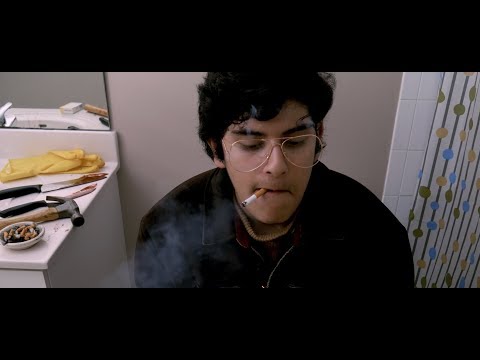
All these weeks of prep finally led up to this one final product. Without further ado, here is the movie opening "When We Keep Silent...
-
 As Ricardo and I began to plan out our shots and schedule, we realized we had come up with a huge problem with the location. Since it is set...
 -
Hello! My name is Andrea Angulo and I will be discussing the production of my film opening “When we keep silent” created with my partne...
-
Hello everyone! This is my CCR for my film opening!